
Negative Carbon Dioxide masonry products
Negative Carbon Dioxide masonry products
A world first for masonry product manufacturing
EPD: (minus) -23.34kgs CO2 per 1,000 kg product made.
EPD: (minus) -23.34kgs CO2 per 1,000 kg product made.
Beyond delivering benefits to the natural environment via waste site remediation, Nu-Rock’s progressive green technology is a ‘game changer’ when compared with old fashioned and energy hungry clay fired and concrete product manufacturing.
Traditional concrete product manufacturing requires mining and transportation of virgin materials whereas Nu-Rock does not. Traditional Portland-cementitious concrete product manufacturing emits large amounts of CO2 whereas Nu-Rock is a non-Portland cementitious technology (NPCP) that does the opposite.
A World First
A World First
Nu-Rock technology reduces carbon dioxide emissions by actively absorbing CO2 from the atmosphere during the mixing and curing stage of the manufacturing process.
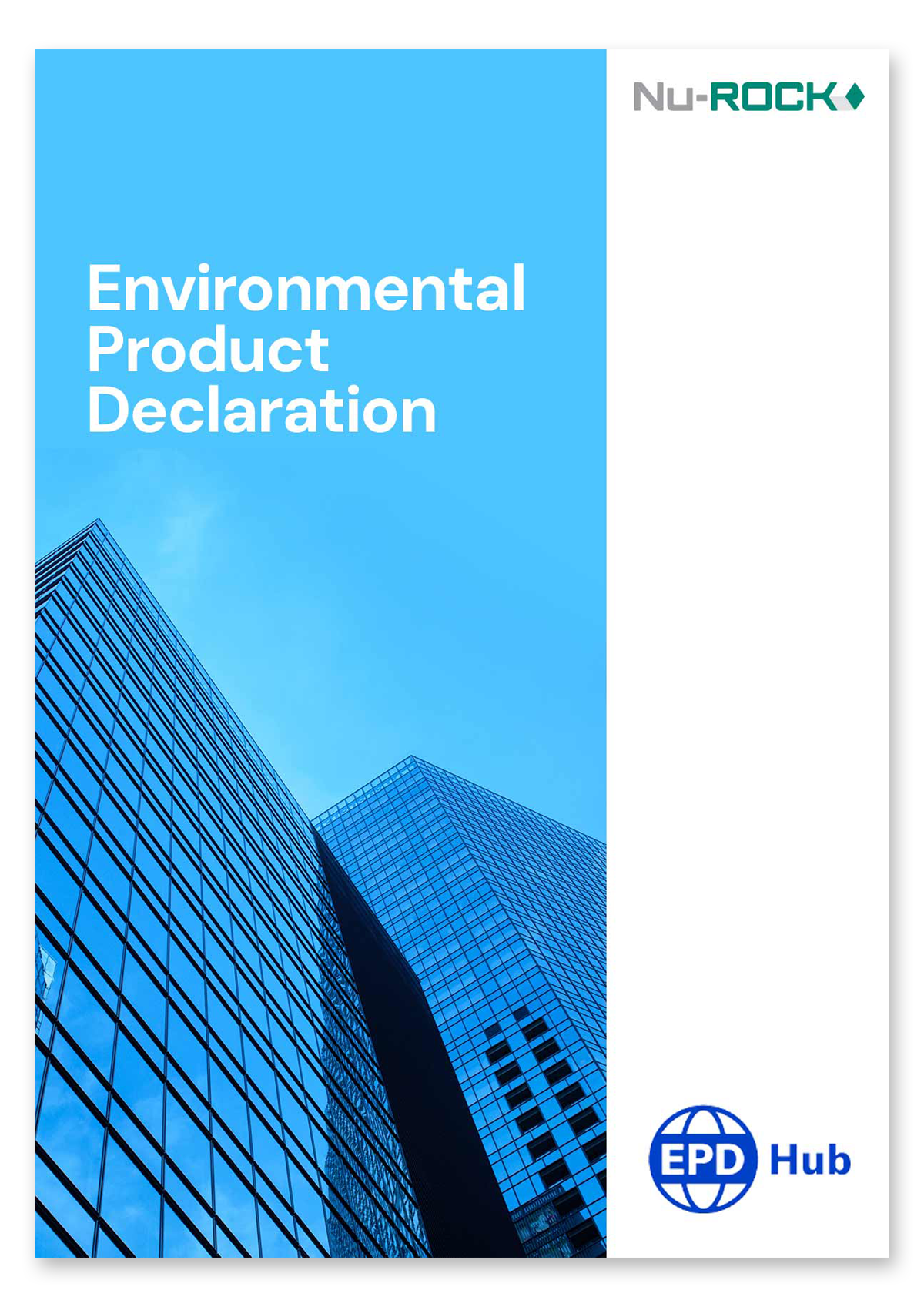
The EPD published by EPD Hub in April 2024, confirms that Nu-Rock technology promotes the absorption of Carbon Dioxide with (minus) -23.34 kilos of CO2 per 1,000 kgs of Nu-Rock product made.
Since January 2024, CO2 has been absorbed into Nu-Rock blocks during the curing process at the Mt. Piper Plant. This breakthrough process is a part of the long-term objective to utilise CO2 captured by industry partners and to ultimately to reduce their carbon dioxide emissions.
To review EPD click here to see PDF.
Emissions free manufacturing
Nu-Rock’s “Formulated Rock” technology uses an emissions-free manufacturing process. It represents a significant improvement on centuries-old, energy-intensive methods that require the quarrying, transport, and kiln firing of limestone at temperatures of up to 1500°C. These traditional processes also rely on the extraction and movement of finite natural resources such as sand and aggregates.
In contrast to Nu-Rock, clay-based product manufacturing is also highly energy-intensive, typically involving a seven-day warming and drying cycle at 500°C, followed by a three-day firing process at 1050°C.